
What Is Whiskey Row in Louisville? A Complete Guide
Last Updated: Apr 22, 2026
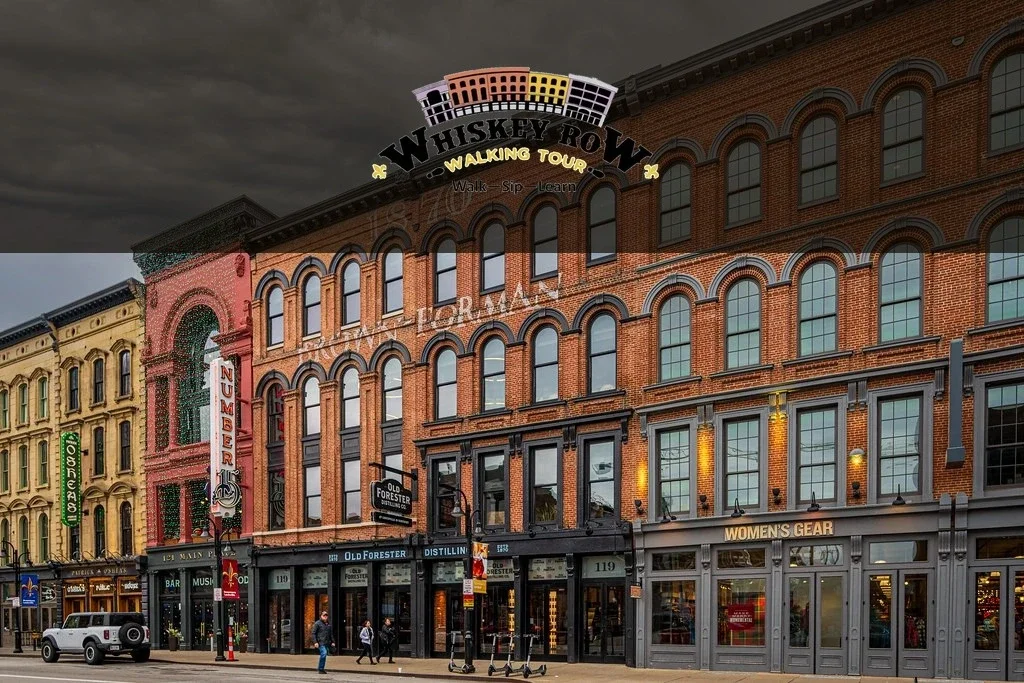
Why I've Spent 15 Years Walking This Street
I've been guiding tours on Whiskey Row for fifteen years, and I still stop at the corner of First and Main to take it all in before every single tour. There is no other block in America that tells the story of bourbon the way this one does. The cast-iron storefronts, the brick facades, the smell of bourbon drifting out of an open distillery door in the morning -- this is the place where Kentucky bourbon became a global industry, and it is the place where that industry is being reborn right now.
When guests arrive for the first time, they almost always ask the same thing: what exactly is Whiskey Row, and how did it get here? In this guide, I want to answer that question the way I answer it on tour -- with the full story, not the abbreviated version you'll find on a historical marker.
What Is Whiskey Row?
Whiskey Row refers to a historic stretch of Main Street in downtown Louisville, Kentucky, running roughly from Brook Street through First to Second Street. The defining feature of these blocks is their collection of 19th-century Renaissance Revival, Beaux-Arts, and Chicago School-style buildings with distinctive cast-iron storefronts, most constructed between 1852 and 1905. They were built specifically to serve the bourbon industry, providing warehouse space, sales offices, and trading floors for distilleries operating across Kentucky.
Today, the term is used more broadly to describe the entire bourbon district along West Main Street, which now includes craft distilleries, tasting rooms, bourbon bars, restaurants, and retail shops extending well beyond that original single block. But the soul of the district -- the architectural heart of it -- is that one block between First and Second Streets, and that is where I start every tour.
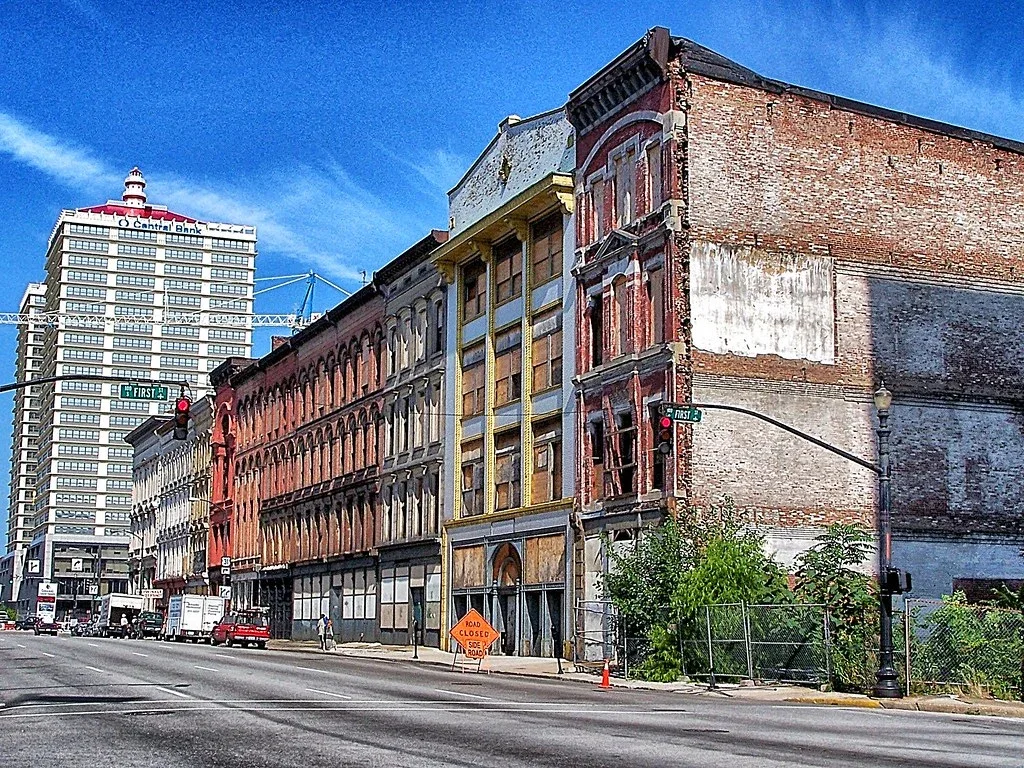
How Whiskey Row Got Its Name
The name came organically, the way the best Louisville traditions do. By the 1880s, Main Street had become so saturated with whiskey firms, sales agents, warehouses, and distillery offices that locals simply started calling it Whiskey Row. At its peak before Prohibition, this block was the Wall Street of bourbon. Virtually every major Kentucky distillery had a presence here because Louisville's position on the Ohio River made it the ideal shipping and trading hub for barrels moving east to Pittsburgh, west to St. Louis, and south to New Orleans.
I always tell my guests that in the mid-1800s, if you wanted to buy or sell bourbon in America, you came to this block. It was the center of the entire American whiskey trade. Distilleries from across Kentucky transported their barrels by train or wagon to Louisville for warehousing and sale, and the Ohio River made export efficient and profitable.
The Architecture That Survived Everything
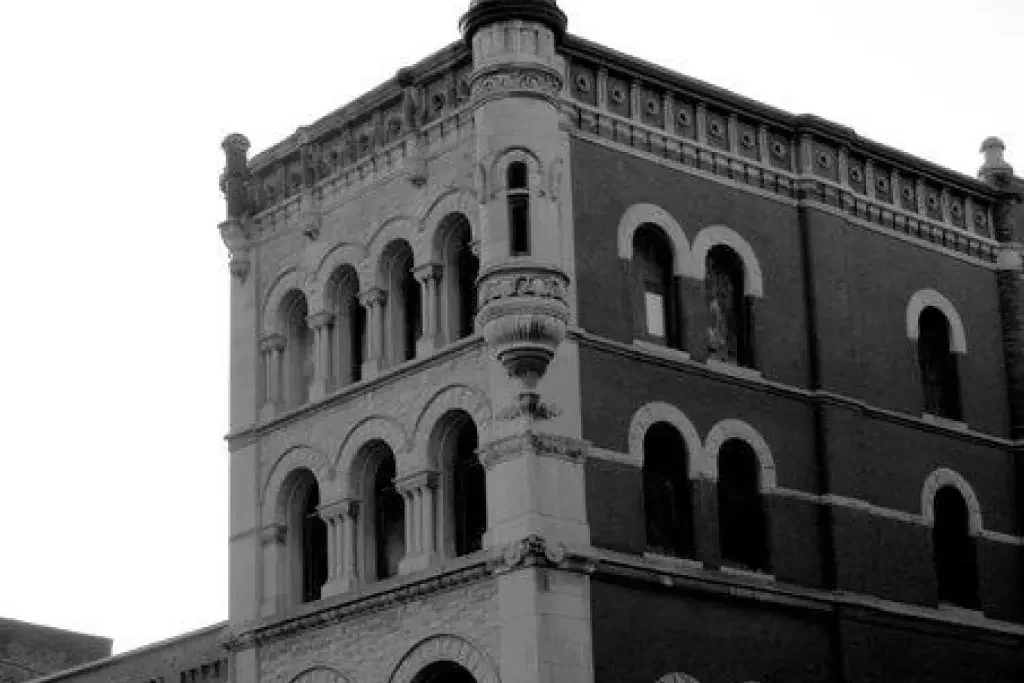
The buildings on Whiskey Row were designed to impress. The cast-iron storefronts were a deliberate statement of wealth and permanence -- iron was expensive, and using it on a commercial facade said something about the ambitions of the businesses inside.
The block was listed on the National Register of Historic Places in 2010, recognizing eleven contributing buildings that together form one of the finest examples of 19th-century commercial architecture in Kentucky. When you walk past these facades on tour, I point out the different architectural styles -- the arched windows of the Renaissance Revival buildings, the horizontal emphasis of the Chicago School structures. I try to give guests a sense of what this block would have looked, smelled, and sounded like in 1880.
In 2011, these buildings were placed on Louisville's Most Endangered Historic Places list and slated for demolition. An agreement between the city, developers, and preservationists saved them.
Prohibition, the 2015 Fire, and the Long Silence
Prohibition hit Whiskey Row like a wrecking ball. When the Volstead Act took effect in 1919, the distilleries closed, the offices emptied, and the block went quiet. For decades, these magnificent buildings sat underused, repurposed for coin dealerships, accounting firms, and nightclubs. The architecture survived, but the soul of the block had left.
Then, on July 6, 2015, a fire damaged three buildings at 111–115 West Main Street, where Old Forester is located today. The fire started in the basement of a building being renovated, where workers using acetylene torches left smoldering slag behind. No injuries -- but a jarring reminder of how fragile this historic block remained even in the midst of its revival.
The Modern Revival: How Whiskey Row Came Back
The revival of Whiskey Row is one of the great Louisville success stories of the past decade. In 2013, the Evan Williams Bourbon Experience opened at 528 West Main Street, and that was the spark. It proved there was real appetite for immersive, urban distillery experiences downtown and opened the door for everyone who followed.
Today, Whiskey Row is home to multiple working distilleries and tasting rooms. Old Forester returned to its original 1882 location at 119 West Main in 2018. Bardstown Bourbon Company brought its acclaimed blending philosophy to 730 West Main. Buzzard's Roost set up a micro-still and education-focused tasting room. Barrels and Billets offers a custom blending experience unlike anything else on the strip. Pursuit Spirits rounds out a lineup that would have been unimaginable just a decade ago.
What You Will Find on Whiskey Row Today
Distilleries and Tasting Rooms
The beating heart of Whiskey Row is its distilleries. Whether you want a guided tour, a seated tasting flight, a blending class, or simply a pour at the bar, you will find it within a few blocks. Each distillery has its own personality and story, and part of what I do on the Whiskey Row Walking Tour is help guests understand what makes each one distinct.
Restaurants and Bars
Whiskey Row has become a serious dining and drinking destination. The stretch of Main Street surrounding the distilleries is home to some of Louisville's most interesting restaurants and bourbon bars. After a tour, guests often continue the evening here, and I am always happy to point them in the right direction.
History and Architecture
Even for visitors who are not bourbon drinkers, Whiskey Row is worth a visit for the architecture and history alone. The block sits adjacent to Museum Row, which includes the Frazier History Museum, the Louisville Slugger Museum, and the Muhammad Ali Center -- making it an easy and rewarding half-day itinerary.
The Best Way to Experience Whiskey Row
In my fifteen years of guiding here, I've come to believe that the best way to experience Whiskey Row is on foot, with someone who knows the stories behind the storefronts. The distilleries are great, and I encourage everyone to visit them. But the context -- the history of the block, the families who built these buildings, the forces that created and nearly destroyed the bourbon industry -- that context is what transforms a tasting into an experience.
That is exactly what the Whiskey Row Walking Tour was built to provide. We depart from the Kentucky Bourbon Trail Welcome Center inside the Frazier History Museum at 829 West Main Street and cover the full story of Whiskey Row while visiting three distillery stops with all tastings included. Tours run Thursday through Sunday, March through October, at $129 per person.
Ready to experience Whiskey Row for yourself? Come tour Whiskey Row alongside me in real life. Book your spot at whiskeyrowwalkingtour.com and I will see you on the Row.

About the Author
Drew Shryock | Lead Guide & Owner, Whiskey Row Walking Tour
I'm Drew Shryock -- a lifelong Louisvillian, professional tour guide, and owner of the Whiskey Row Walking Tour. I've spent fifteen years guiding visitors through the history, architecture, and bourbon culture of this stretch of Main Street. Before founding the tour, I spent 22 years in the City of Louisville's Economic Development Department, directly involved in the projects that shaped the city you see today.
Whiskey Row is my backyard and sharing it is my profession. Every detail in this post comes from firsthand experience on the street.