
When Did the Whiskey Row Fire Happen? The Blaze That Changed Louisville's Bourbon Belt
Last Updated: Apr 24, 2026
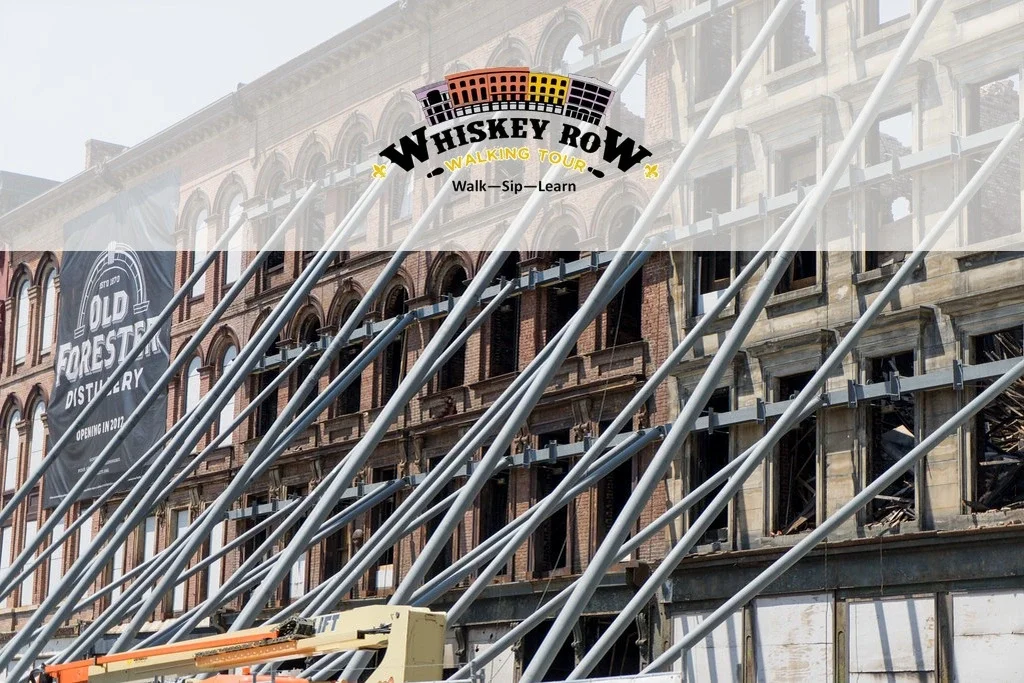
The Whiskey Row fire happened on July 6, 2015, when a four-alarm blaze tore through three Civil War-era warehouse buildings at 111, 113, and 115 W. Main Street in downtown Louisville, Kentucky. The accidental fire broke out in the basement of a building under renovation and spread rapidly through the adjoining structures. No injuries were reported, and the historic cast-iron facades were ultimately preserved as part of the block's subsequent redevelopment.
A Block That Was Built to Burn -- and Built Back Again
I've been walking this stretch of Main Street for going on fifteen years, and there's something I tell every group before we take our first step past the Frazier Kentucky History Museum: the buildings around us have outlasted fire, flood, Prohibition and the better part of two centuries of bad luck. That's not a tourism pitch. That's just true.
The 1857 Fire: Before Whiskey Row Was Whiskey Row
The block's relationship with fire goes back further than most people realize. In 1857, a group of buildings on the 100 block of W. Main burned to the ground. The structures that replaced them -- the cast-iron-fronted warehouses you walk past on the tour today -- were built between 1852 and 1905, many of them specifically constructed on the footprint of what was lost. In other words, the historic Whiskey Row you see now is itself a rebuilt city.
Those replacement buildings went on to house the Wall Street of American whiskey. At the industry's peak before Prohibition, more than 89 different whiskey companies had their headquarters along this stretch of Main Street. Bourbon from distilleries throughout central Kentucky arrived here by train and river boat, was warehoused, blended, and shipped downriver to New Orleans and overland to St. Louis for the expanding West.
The 1910 Brown-Forman Fire: The Row at Its Height
On October 2, 1910, fire struck again -- this time hitting Brown-Forman's office and bottling operation at 117 W. Main. The damage was heavy. A batch of Old Forester that hadn't yet been bottled had to be re-barreled while repairs were completed. When that batch was finally bottled, Owsley Brown -- George Garvin Brown's son and successor -- labeled it "Old Fine Whisky." It's a small footnote in bourbon history, but it illustrates something important: the Row was operating at full capacity, and even a major fire was treated as an inconvenience, not a catastrophe. There was too much business here to stay down for long.
Prohibition: The Slowest Fire of All
If you want to understand what truly hollowed out Whiskey Row, don't look for flames. Prohibition, which took effect nationally in 1920, did what no fire had managed to do: it cleared the block for a generation. The distilleries closed. The warehouses went silent. The 89 companies that had made Main Street the center of the American bourbon trade scattered, shuttered, or quietly waited out the dry years selling whiskey for "medicinal purposes" under federal license. Brown-Forman moved its operations off the Row entirely in 1924 and didn't come back for the better part of a century.
By mid-century, Whiskey Row was a shell of what it had been. By the turn of the millennium, much of it sat vacant. In 2001, the buildings at 101-103 W. Main collapsed entirely due to decades of neglect.
The 2015 Fire: Four Alarms on a Block Already Fighting Back
Here's the cruel timing of it. By July 2015, Whiskey Row was finally coming back. Evan Williams Bourbon Experience had opened on the block in 2013, the first distillery presence on Main Street in nearly a century. Brown-Forman had announced a $45 million plan to rebuild Old Forester Distilling Co., at 117-119 W. Main, its original home from the 1880s. Developers were actively renovating the long-vacant buildings. The bourbon renaissance was real, and this block was at the center of it.
Then, on the afternoon of July 6, 2015, workers using acetylene torches and grinders in the basement of 111 W. Main threw off sparks that smoldered, caught, and spread. The fire climbed through all three buildings -- 111, 113, and 115 W. Main -- before Louisville firefighters, deploying some 90 personnel, seven trucks, and thirteen engines, brought it under control. It became a four-alarm event. The buildings were vacant and under renovation at the time, which is the only reason there were no casualties.
The facades survived. A firewall recently installed between the burning buildings and the adjacent Old Forester project kept that development intact. But the interior of those three structures was devastated.
Brown-Forman, one of the investors in Main Street Revitalization -- the group that had purchased the buildings in 2011 specifically to prevent their demolition -- sent a statement to employees the following day. The message was careful but clear: the plans for the Old Forester Distillery were unchanged. The ground-breaking would go forward.
What the 2015 Fire Changed -- and What It Didn't
The facades at 111-115 were preserved and incorporated into the redeveloped block, which is exactly as it should be. Those cast-iron storefronts are the second-largest collection of cast-iron building facades in the United States, behind only New York City's SoHo district. Losing them would have been irreplaceable.
Old Forester Distilling Co. opened at 117-119 W. Main in June 2018. The block filled in around it: Hotel Distil, Moxy Louisville Downtown, restaurants, bars, and new distillery tasting rooms. By the time Buzzard's Roost Whiskey Row Experience opened in 2023, the revival that nearly ended in 2015 was not just complete -- it had exceeded every reasonable expectation.
Old Forester even commemorated the fire directly, filling barrels on July 7, 2015 -- the day after the blaze was extinguished -- and later releasing them as the 117 Series "Fireman Barrels," with proceeds benefiting the Louisville Firefighters Disaster Fund.
What I Think About When We Pass Those Buildings
Every tour I lead walks right past 111-115 W. Main. I point out the cast-iron facades, the architectural details, the way the block mixes old bones and new purpose. And I think about the fact that this stretch of street has burned, gone quiet under Prohibition, suffered devastating river floodings, nearly been demolished, and then burned again -- and it is still here.
That's not an accident. It's the result of people who understood what this block meant and refused to let it go under quietly. The developers who bought the buildings in 2011 to stop the wrecking ball. The firefighters who held the 2015 blaze at a firewall and saved the Old Forester project. The brands that came back to Main Street when it would have been easier to build somewhere else.
Whiskey Row is a walking lesson in resilience. That's why I think every bourbon lover owes it a visit in person, not just a read.
If you want to walk the block with someone who's spent fifteen years studying every facade, every story, and every poured glass along the way, I'd love to be your guide.
Ready to see Whiskey Row for yourself? The Whiskey Row Walking Tour departs Thursday through Sunday from the Kentucky Bourbon Trail® Welcome Center at 829 W. Main Street. Tickets are $129 per person and include tastings at three distilleries. Book your spot at whiskeyrowwalkingtour.com.
ABOUT THE AUTHOR
Drew Shryock | Lead Guide & Owner, Whiskey Row Walking Tour
Drew Shyrock has guided visitors along Louisville's Whiskey Row for fifteen years. Before leading tours, he spent 22 years with the City of Louisville's Economic Development Department, where he was directly involved in downtown development projects that shaped the city's future. As a lifelong Louisvillian and NGLCC-certified small business owner, Drew brings a layer of institutional knowledge to every tour that no travel guide can replicate -- including the stories behind the buildings that nearly didn't survive.